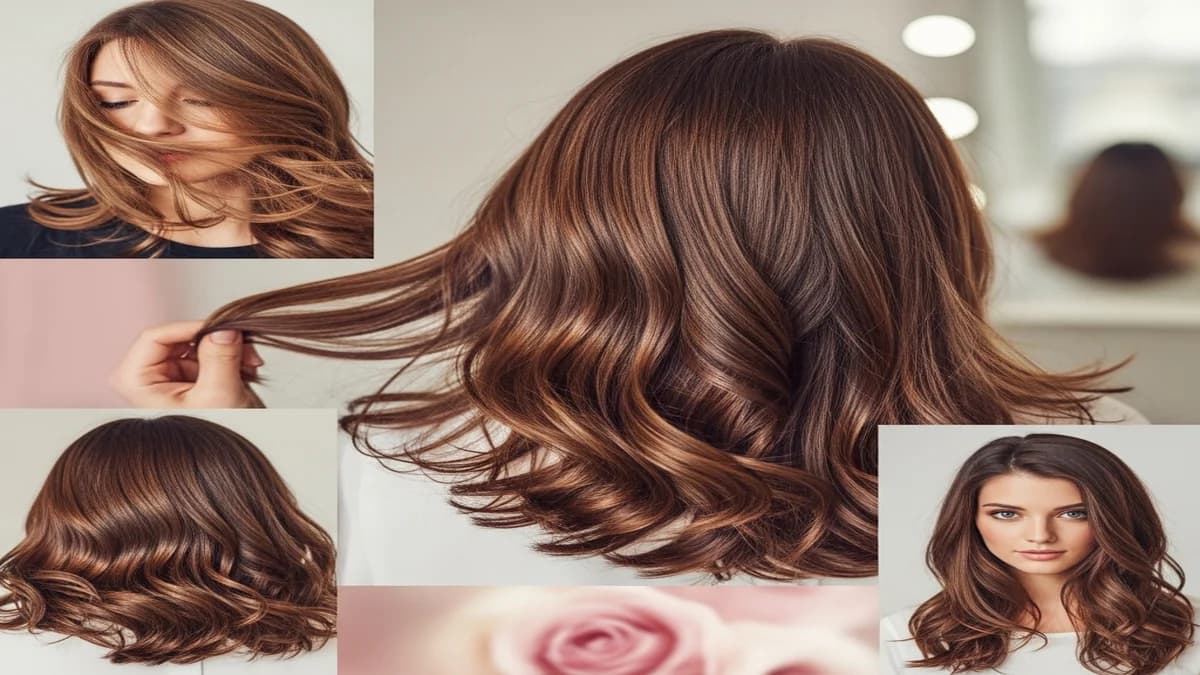
Hairstyles for Every Face Shape: What Actually Works
Here is something I wish someone had told me before I spent my twenties cycling through haircuts that never quite looked right: the shape of your face matters more than the trend of the moment. A textured shag that looks incredible on your friend with an oval face might look completely different on you if your face is round. Not worse — just different in a way that does not do you any favors.
The good news is that figuring out your face shape and finding the cuts that flatter it is not complicated. It does not require an expensive consultation. It just requires looking at your proportions honestly and understanding a few principles that stylists use every day.
This is not a list of rules you have to follow. It is a set of guidelines that explain why certain cuts look better on certain faces — so you can walk into a salon and make informed choices instead of flipping through a magazine and hoping for the best.
How to Figure Out Your Face Shape
Before anything else, you need to know what you are working with. Here is the simplest way to do it.
Pull your hair completely back off your face — a ponytail, a headband, whatever gets it out of the way. Stand in front of a mirror in good light and really look at the outline of your face.
If you want precision, grab a flexible tape measure:
- Forehead: Measure across the widest part, typically from one temple to the other
- Cheekbones: Measure across the highest point of your cheekbones
- Jawline: Measure from the tip of your chin to the point below your ear where your jaw angles upward, then double it
- Face length: Measure from the center of your hairline straight down to the tip of your chin
Now compare those numbers:
Oval: Your face is about one and a half times longer than it is wide. Cheekbones are the widest point. The forehead is slightly wider than the jaw, and the jawline is gently rounded.
Round: Length and width are roughly equal. The cheeks are the widest part. Everything is curved — no sharp angles anywhere.
Square: Length, forehead, and jawline are all similar widths. The defining feature is a strong, angular jawline with squared-off corners.
Heart: The forehead is the widest measurement. The face narrows progressively to a pointed or narrow chin. Cheekbones are prominent.
Oblong (rectangle): The face is noticeably longer than it is wide — more so than oval. Forehead, cheekbones, and jaw are similar widths, creating straight sides.
Diamond: Cheekbones are the widest point by a clear margin. Both the forehead and jawline are narrow.
Triangle (pear): The jawline is wider than the forehead. The face gets broader as you go down.
Do not stress about being a perfect match. Most people are a blend — like "mostly oval with a slightly stronger jaw" or "round-ish with prominent cheekbones." Go with whichever shape is closest.
Oval Face: The Lucky Ones
I will be honest — if you have an oval face, you have the easiest job here. Your proportions are naturally balanced, which means almost everything works. The challenge is not finding a flattering cut; it is avoiding the rare styles that distort your natural balance.
What Works
Long layers are effortless on an oval face. They add movement and dimension without altering your proportions. Whether you go with subtle face-framing layers or dramatic, choppy ones, the oval shape holds it all well.
The blunt bob — chin-length or collarbone-length — looks sharp and intentional. Your balanced proportions mean the clean horizontal line does not cause problems.
Bangs of almost any kind. Side-swept, curtain bangs, wispy bangs, even blunt fringe — oval faces handle them all. This is genuinely one of the few face shapes where blunt straight-across bangs look great.
Pixie cuts. Short hair requires balanced proportions to look good, and that is exactly what you have. A pixie shows off your bone structure without exposing any imbalance.
The wolf cut. This shaggy, layered style has heavy volume at the crown and face-framing layers that fall beautifully around an oval face.
What to Watch Out For
The main risk is adding too much volume directly on top of your head, which can elongate your face into oblong territory. If you like height — a voluminous blowout, a high topknot — just balance it with some width or face-framing detail.
For Men
Classic tapers, textured crops, quiffs, side parts, and medium-length styles all work. You have remarkable latitude. If you want to try something trendy, this is the face shape that can pull it off.
Round Face: Create Angles and Length
Round faces are beautiful — full cheeks and soft curves give a youthful quality that ages well. The styling principle is straightforward: add vertical lines and angular elements to create contrast with your natural curves.
What Works
Long layers that fall past the chin. This is the single most flattering move for a round face. Hair that ends at your chin mimics your face's outline and emphasizes the roundness. Hair that falls below it creates a lengthening frame.
A deep side part. Center parts emphasize the symmetry of a round face, which makes it look rounder. A side part creates a diagonal line across the forehead that instantly adds angles and visual length.
Face-framing layers that start at the cheekbone and angle downward draw the eye along a vertical line, visually lengthening your face. Combined with a side bangs style, this creates a flattering diagonal frame.
Volume at the crown. Height on top of your head adds vertical dimension that balances the width. A blowout with root lift, a half-up style with volume at the crown, or a layered cut with movement on top all accomplish this.
Asymmetrical cuts. An angled lob, a side-swept look, or any style where one side is deliberately different from the other — asymmetry is the natural enemy of roundness.
What to Avoid
Chin-length bobs that mirror the round outline of your face. This is the most common mistake. It looks like your face and your hair are the same shape, and neither benefits.
Blunt straight-across bangs that create a horizontal line across the widest part of your face. This emphasizes width rather than reducing it.
Center parts on short or medium hair. The perfect symmetry highlights your face's natural roundness. If you love a center part, keep the hair long enough to fall well past your chin.
For Men
Fades with length and texture on top work beautifully — the short sides slim the face while the height on top elongates it. Pompadours, quiffs, and textured crops with volume all add the vertical dimension a round face benefits from.
Square Face: Soften the Angles
Square faces have gorgeous bone structure — strong jawlines and defined features that photograph well and age beautifully. The styling goal is not to hide that structure but to soften it, adding some curves and movement to complement the angles.
What Works
Long, soft layers with waves or texture. This is the gold standard. The movement breaks up the angular lines of your jaw and forehead, creating a softer overall impression without hiding the bone structure underneath.
Side-swept bangs. The diagonal line across your forehead counterbalances the horizontal line of a strong jaw. This creates an asymmetry that is incredibly flattering.
Wispy or curtain bangs. The soft, feathered quality is the perfect complement to angular features. Curtain bangs in particular frame a square face beautifully because they create a soft curve where your face has a sharp corner.
Long bobs that fall below the jaw. The key word is below — a bob that ends at the jaw emphasizes the angle. One that falls an inch or two past it softens it.
Face-framing highlights. Not a cut, technically, but color placed around the face draws attention to the center of your face and away from the jaw corners. The lightened pieces create a soft frame that flatters angular features.
What to Avoid
Blunt, one-length cuts at jaw height. This is the equivalent of drawing a rectangle around a rectangle. The sharp cut line echoes your sharp jaw, and neither looks its best.
Severe center parts on straight hair. This emphasizes the symmetrical angularity. If you want a center part, add some wave or texture to soften it.
Slicked-back styles that expose the entire jawline without any softening frame. Unless you are going for a deliberately dramatic, editorial look, this can feel harsh.
For Men
Textured crops soften the forehead. A classic side part with some texture adds asymmetry. Medium-length styles with layers provide the most softening. Avoid super-sharp geometric cuts that echo the angular jaw — you already have great structure, so the hair should provide some contrast.
Heart Face: Balance Top and Bottom
Heart-shaped faces have a wider forehead and cheekbones that narrow to a smaller chin. Think of a face framing highlights approach — the goal is to draw attention to the middle of the face and add visual weight below the cheekbones.
What Works
Chin-length bobs. This is the power move for heart faces. Adding width at the jaw creates balance with the wider forehead. A chin-length bob with a slight wave or texture is especially effective.
Side-swept bangs reduce the visual width of the forehead. They create a diagonal line that narrows the top of the face and shifts focus toward the cheekbones.
Lobs with waves at the ends. The volume at the bottom of the hair adds the counterweight your face needs. Straight, flat ends do not accomplish this — you want some movement and body at chin level and below.
Medium-length layers with volume at the jawline. Specifically: layers that add fullness from the cheekbone down. This fills in the visual gap where your face narrows.
What to Avoid
Slicked-back styles that fully expose the wider forehead. This exaggerates the top-heavy proportions rather than balancing them.
Very short pixies without volume. A cropped cut with no strategic volume at the crown or around the face can leave the wider forehead as the dominant feature. If you want a pixie, add texture and height.
Heavy volume at the crown with flat sides. This adds more width on top, which is exactly what you do not want.
For Men
Fringe is your best friend — it covers part of the forehead and instantly rebalances proportions. Side-swept styles and textured medium-length cuts also work well.
Oblong Face: Add Width, Reduce Length
Oblong (or rectangle) faces are longer than they are wide, with straight sides that make the length more pronounced. If you have a rectangle face shape, the styling philosophy is the opposite of round face advice: you want to add width and horizontal lines.
What Works
Bangs. Almost any kind. Bangs create a horizontal line across the face that visually shortens it. Full bangs, curtain bangs, side bangs, wispy bangs — all of them help. This is the face shape where bangs make the most dramatic difference.
Shoulder-length cuts with volume at the sides. Avoid very long hair that falls straight down, creating more vertical lines. Shoulder-length hair with layers that add volume at the sides creates the widening effect you need.
Curls and waves. Natural texture adds horizontal dimension automatically. If your hair has any natural wave, lean into it rather than straightening.
Bobs with volume. A full, voluminous bob is spectacular on an oblong face. The width at cheek and jaw level counterbalances the length.
What to Avoid
Very long, straight hair without bangs. This creates uninterrupted vertical lines that emphasize the length.
High pompadours or top knots that add even more height. You already have length — do not add to it.
Slicked-down, flat styles. Without volume, the face looks even narrower and longer.
For Men
Keep some width at the sides rather than going for a tight fade. A fringe that falls across the forehead shortens the visual length. Avoid tall pompadours and quiffs, which add vertical dimension you do not need.
Diamond Face: Celebrate the Cheekbones
Diamond faces have stunning bone structure — wide, prominent cheekbones with a narrow forehead and a narrow jaw. The goal is to add width at the forehead and chin while letting those cheekbones do their thing.
What Works
Side-swept bangs add visual width at the forehead, balancing the cheekbones. This is a small change with a big impact.
Chin-length bobs. Width at the jaw balances the narrow lower face and creates a frame for the cheekbones.
Tucked-behind-ears styling. This showcases what is arguably your best feature — those cheekbones — rather than hiding them. Pair with face-framing layers for the best effect.
Medium-length textured cuts provide balanced proportions that complement rather than compete with your bone structure.
What to Avoid
Slicked-back styles that narrow the forehead further and make the cheekbones look disproportionately wide.
Very short, buzzed cuts that expose the narrow forehead and jaw without any hair to soften the diamond outline.
Excessive volume at the cheekbones — your cheekbones are already the widest point, so you do not need to add more width there.
Triangle Face: Build Volume Up Top
Triangle (or pear-shaped) faces are wider at the jawline than at the forehead. The approach is to add volume at the top of the face to balance the broader lower half.
What Works
Volume at the crown and temples. Blowouts, root lift, and styles with fullness on top create the counterbalance you need. Layered cuts that add body around the temples are ideal.
Bangs. Full bangs, side-swept bangs, and curtain bangs all add visual width at the forehead, bringing it into proportion with the jaw.
Shorter bobs that end above the jaw. This prevents the hair from adding more visual width at the already-widest point. A layered bob that sits above the jaw shifts focus upward.
What to Avoid
One-length cuts that end right at the jawline. This adds volume exactly where you have the most width, exaggerating the triangle shape.
Flat, volume-free styles. Without volume on top, the wider jawline dominates.
Universal Tips That Apply to Everyone
Work with your hair texture, not against it. The best haircut is one that looks good when you style it in five minutes on a Tuesday morning, not one that requires forty minutes with a round brush. If your hair is naturally wavy, get a cut that uses the wave. If it is fine and straight, get a cut designed for fine hair. Fighting your texture every day is exhausting and rarely looks as good as working with it.
Consider your lifestyle. A high-maintenance blowout style is gorgeous but impractical if you hit the gym every morning. A wash-and-go cut that aligns with your face shape will serve you better in real life than a salon-perfect style you cannot recreate at home.
Look at the whole picture. Your hairstyle interacts with your color season, your skin tone, your body proportions, and even your glasses. A good stylist considers all of these, not just face shape in isolation.
Communicate with your stylist. Bring reference photos, but also tell them your face shape concerns. A stylist who understands your proportions can adapt a trend to work with your face rather than applying it generically.
Do not be afraid to experiment. Face shape guidelines are useful, but they are not law. Some of the most striking looks come from deliberately breaking the rules — a round-faced woman with a blunt bob can look stunning if the cut is well-executed and she carries it with confidence.
The point of understanding your face shape is not to limit your choices. It is to make your choices more intentional. When you know what your proportions respond to — angles versus curves, length versus width, volume versus sleekness — you can evaluate any trend and decide whether it will work for you before committing to the scissors. And that makes every trip to the salon more confident, more efficient, and a lot more fun.
Frequently Asked Questions
How do I determine my face shape?▼
Pull your hair back, stand in front of a mirror, and look at the outline of your face. Measure four things with a tape measure: forehead width (across the widest part), cheekbone width (across the tops of your cheeks), jawline width (from chin tip to below your ear, doubled), and face length (hairline to chin). The widest measurement tells you a lot — widest at cheekbones is usually oval, equal all around is square, widest at forehead is heart-shaped.
What face shape is the most versatile for hairstyles?▼
Oval faces have the most flexibility because their proportions are naturally balanced — the face is about one and a half times longer than it is wide, with the cheekbones being the widest point. Nearly every haircut flatters an oval face, from pixies to waist-length layers. That said, every face shape has excellent options — it is about finding what works with your proportions, not against them.
What hairstyles make a round face look slimmer?▼
Styles that create vertical lines and add height are your friends. Long layers that fall past the chin, deep side parts, face-framing layers, and styles with volume at the crown all elongate a round face. Avoid chin-length bobs that mirror your face shape and blunt straight-across bangs that emphasize width.
What hairstyles soften a square jawline?▼
Soft textures and layers that fall around the jaw are key. Side-swept bangs, wispy curtain bangs, long textured layers, and waves that begin at cheekbone height all soften angular features. Avoid blunt chin-length cuts that end right at the jawline and severe center parts that highlight symmetrical angles.
What hairstyles suit a heart-shaped face?▼
Heart faces are wider at the forehead and narrow at the chin, so the goal is to add visual weight below the cheekbones. Chin-length bobs, side-swept bangs, lobs with waves at the ends, and medium-length layers with volume at the jawline all create balance. Avoid slicked-back styles that expose the full forehead width.
Can I wear short hair with a round face?▼
Absolutely. The key is choosing a short cut that adds height and angles rather than emphasizing roundness. A pixie with volume at the crown and longer, side-swept pieces in front works beautifully. An undercut with textured length on top also flatters round faces. The thing to avoid is a uniform, close-cropped cut with no variation in length.
Does hair parting matter for face shape?▼
More than most people realize. A deep side part elongates round faces and softens square faces by creating asymmetry. A center part works well for oval and diamond faces but can emphasize roundness in round faces or angles in square faces. Experiment — sometimes shifting your part by half an inch makes a surprising difference.
What hairstyles work for an oblong face?▼
Oblong faces benefit from anything that adds width and avoids adding length. Bangs are your best friend because they create a horizontal line that visually shortens the face. Shoulder-length cuts, full side-swept bangs, layers that add volume at the sides, and curly or wavy textures all work well. Avoid very long straight hair with no bangs, which emphasizes length.
How do I find a hairstyle that suits both my face shape and hair texture?▼
Work with your natural texture rather than fighting it. If you have fine straight hair and a round face, long layers with a side part are more practical than trying to maintain big curls for volume. If you have thick curly hair and a square face, your natural texture already provides the softening movement you need. The best haircut is one you can style easily on a normal morning.
Should men follow face shape rules for haircuts too?▼
The same principles apply. Men with round faces benefit from height on top (fades, pompadours), square-faced men look great with textured crops that soften angles, and heart-shaped faces are flattered by fringe that balances a wider forehead. The main difference is that men's cuts are usually shorter, so the proportional effects are more pronounced.
Can bangs work for every face shape?▼
Yes, but the type of bangs matters enormously. Curtain bangs are nearly universal — they frame every face shape well. Blunt straight bangs shorten long faces but can overwhelm round ones. Wispy bangs work for square and heart faces by softening without adding weight. Side-swept bangs flatter round, square, and heart shapes by creating diagonal lines. The wrong bangs can throw proportions off, so consult your stylist about which style suits you.
How often should I update my hairstyle?▼
Most stylists recommend a trim every six to eight weeks to maintain shape, and a style reassessment every one to two years as trends evolve and your face changes with age. Weight changes, aging, and even shifts in personal style can make a previously perfect cut feel wrong. There is no rule that says you must keep the same look forever.
Find Your Perfect Hairstyle
Try on trending hairstyles with our AI virtual try-on feature.
Join 10,000+ beauty enthusiasts. Unsubscribe anytime.
Was this article helpful?
Continue Your Beauty Journey
Hair Color Trends 2026: The 12 Shades Colorists Cannot Stop Recommending
Hair color trends 2026 — the 12 shades colorists are recommending right now. From copper to mushroom brown. See them all.
Best Hair Care Routine for Straight, Wavy, Curly & Coily Hair Types (2026)
The best hair care routine for every hair type — straight, wavy, curly, and coily. Step-by-step wash-day routines, product recommendations, and styling tips.
Balayage vs Highlights: Complete Comparison Guide (2026)
Balayage vs highlights — which coloring technique suits your hair? Compare cost, maintenance, and results. Find your match.