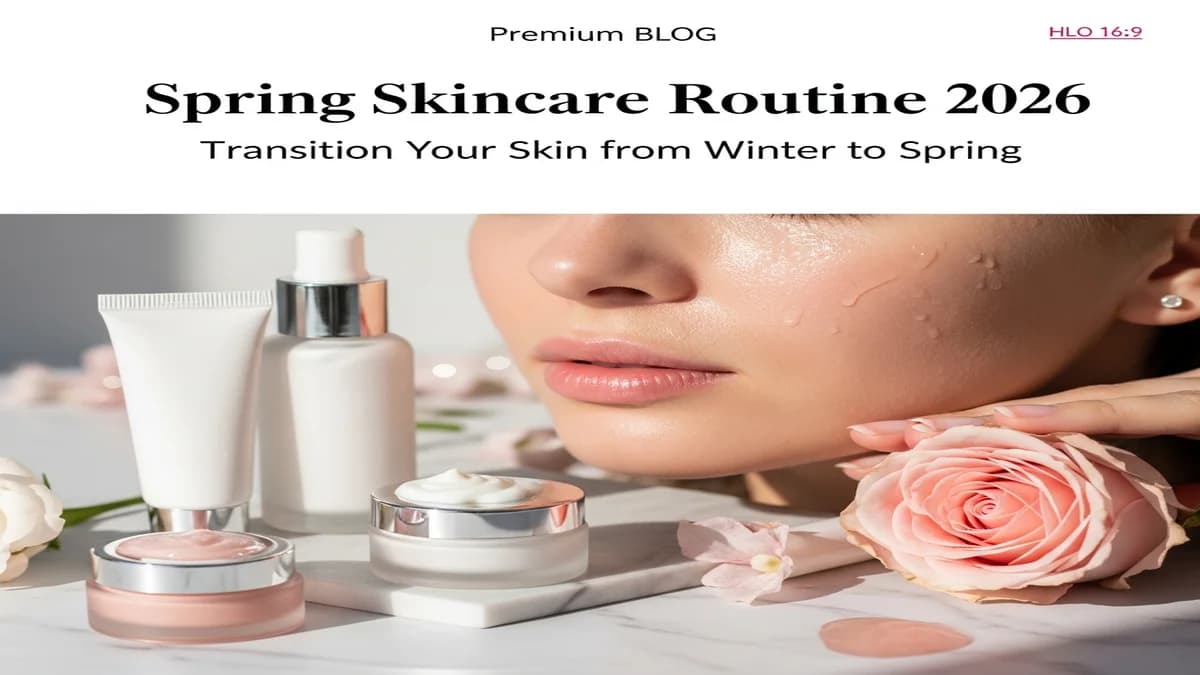
Spring Skincare Routine 2026: Transition Your Skin from Winter to Spring
Your skin has different needs in every season, and the spring skincare transition is one of the most important shifts you will make all year. After months of cold air, indoor heating, and heavy moisturizers, your skin needs a reset. Spring brings increasing humidity, more sun exposure, and the opportunity to shed your winter layers — both literally and in your skincare routine.
This guide walks you through exactly how to update your routine for spring, product by product.
Why Your Skin Needs a Seasonal Update
Your skin is a living organ that responds to its environment. During winter, cold air and indoor heating strip moisture, so heavy, occlusive products make sense. But continuing that same heavy routine into spring causes problems:
Congestion and breakouts: Heavy winter moisturizers can clog pores as temperatures rise and your skin starts producing more sebum.
Dullness: Layers of dead skin accumulated during winter's slower cell turnover make skin look lackluster.
Product pilling: Thick products layer poorly under SPF and makeup in warmer weather.
Missed sun protection: Many people underestimate spring UV levels, thinking they only need SPF in summer.
The spring transition addresses all of these issues systematically.
The 7 Spring Skincare Swaps
Swap 1: Heavy Cream Cleanser to Gel or Foam Cleanser
Winter product: Rich cream or milk cleanser designed to avoid stripping dry winter skin
Spring swap: Lightweight gel cleanser or gentle foam cleanser that removes increased spring sebum production and sunscreen residue without over-drying
Why: As temperatures rise, your skin produces more oil. A richer cleanser may not remove excess sebum effectively, leading to clogged pores. A gel or light foam provides a deeper clean while remaining gentle.
Exception: If you have dry or sensitive skin, you may prefer to stay with your cream cleanser and simply add a first-step oil cleanser for more thorough cleansing.
Swap 2: Rich Night Cream to Lightweight Moisturizer
Winter product: Thick, occlusive night cream packed with heavy emollients
Spring swap: Lightweight lotion or gel-cream moisturizer with humectants like hyaluronic acid
Why: Your skin does not need as much occlusion in spring. Heavy creams can suffocate skin that is producing more natural sebum. Lighter formulas provide hydration without heaviness.
The transition approach: Do not switch overnight. Alternate between your winter cream and spring moisturizer for 1-2 weeks to let your skin adjust gradually.
Swap 3: Upgrade Your SPF
Winter product: SPF 30 moisturizer or occasional sunscreen application
Spring swap: Dedicated SPF 30-50 sunscreen applied daily, generously, and reapplied every 2 hours during outdoor exposure
Why: Spring UV levels are higher than most people realize. In many regions, UV index starts climbing in March and can reach summer levels by April-May. Additionally, if you are using any exfoliating actives (AHAs, BHAs, retinol), your skin is photosensitive and needs reliable protection.
For a deep dive into SPF selection and application, see our comprehensive SPF protection guide.
Swap 4: Add Chemical Exfoliation
Winter approach: Minimal exfoliation to avoid aggravating dry, sensitive winter skin
Spring addition: Regular chemical exfoliation 2-3 times per week with AHAs (glycolic acid, lactic acid) or BHAs (salicylic acid)
Why: Winter leaves behind a buildup of dead skin cells that cause dullness and can trap sebum, leading to spring breakouts. Chemical exfoliants dissolve this buildup, revealing brighter, smoother skin underneath.
Start gently: If you have not been exfoliating through winter, start with a lower concentration (5-8% glycolic acid or 1-2% salicylic acid) and work up as your skin acclimates.
AHA vs BHA:
- AHAs (glycolic, lactic acid): Best for surface-level dullness, dry skin, uneven texture. Water-soluble, works on the skin surface.
- BHAs (salicylic acid): Best for oily, acne-prone skin. Oil-soluble, penetrates into pores.
Swap 5: Introduce Vitamin C
Winter approach: May have skipped vitamin C or used it sporadically
Spring addition: Daily vitamin C serum in the morning, applied after cleansing and before moisturizer and SPF
Why: Vitamin C is the ultimate spring serum. It brightens dull post-winter skin, provides antioxidant protection against increasing UV exposure, helps fade hyperpigmentation, and boosts the effectiveness of your sunscreen.
The combination: Vitamin C + SPF is the gold standard morning combination. Vitamin C neutralizes free radicals that SPF alone cannot block, providing an extra layer of environmental defense.
Swap 6: Switch from Facial Oil to Hydrating Serum
Winter product: Facial oil (rosehip, squalane, marula) used to seal in moisture
Spring swap: Hydrating serum with hyaluronic acid, niacinamide, or glycerin
Why: Facial oils provide excellent occlusion for winter but can feel heavy and contribute to congestion in spring. Hydrating serums deliver water-based moisture that absorbs quickly and layers well under SPF.
Exception: If you have very dry skin, you may want to keep a light facial oil in your evening routine while switching to serum-only in the morning.
Swap 7: Add a Weekly Brightening Mask
Winter approach: Heavy, hydrating masks for moisture
Spring addition: Weekly brightening or clarifying mask to address dullness and congestion
Mask options:
- Clay mask (for oily/combination skin): Draws out impurities and excess oil
- Enzyme mask (for all skin types): Gently dissolves dead skin cells for brightness
- Vitamin C or niacinamide mask (for dullness): Brightens and evens tone
- AHA mask (for textured skin): Resurfaces for smoothness
Complete Spring Skincare Routines
Spring Morning Routine
- Cleanse: Gel or foam cleanser
- Tone (optional): Hydrating or balancing toner
- Serum: Vitamin C serum
- Moisturize: Lightweight moisturizer or gel-cream
- Protect: SPF 30-50 broad-spectrum sunscreen
Spring Evening Routine
- First cleanse: Oil cleanser or micellar water (to remove SPF and makeup)
- Second cleanse: Gel cleanser
- Exfoliate (2-3x per week): AHA or BHA treatment
- Serum: Hyaluronic acid, niacinamide, or treatment serum
- Moisturize: Lightweight night moisturizer
- Eye cream (if used): Lightweight hydrating eye cream
Spring Routine by Skin Type
Oily skin focus: Emphasize BHA exfoliation, niacinamide for oil control, lightweight gel moisturizer, mattifying SPF.
Dry skin focus: Emphasize AHA exfoliation (lactic acid is gentlest), hyaluronic acid serum, keep a medium-weight moisturizer, hydrating SPF.
Combination skin focus: Zone-specific approach. BHA on T-zone, hydrating serum on cheeks. Lightweight moisturizer everywhere with optional extra layer on dry areas.
Sensitive skin focus: Gentle lactic acid exfoliation once per week, centella or niacinamide serum, fragrance-free moisturizer, mineral SPF.
For a personalized routine based on your specific skin type, try GlowAI's AI skin analysis. It assesses your skin's current condition and recommends products and ingredients tailored to your needs.
Common Spring Skincare Mistakes
Mistake 1: Switching everything at once. Introduce one new product every 1-2 weeks to avoid overwhelming your skin and to identify any reactions.
Mistake 2: Over-exfoliating. The excitement of spring leads many people to exfoliate too aggressively. Start with 2 times per week and increase only if your skin responds well.
Mistake 3: Skipping moisturizer because skin feels oilier. Your skin still needs hydration. Skipping moisturizer signals to your skin that it needs to produce MORE oil. Use a lighter formula, but do not skip it.
Mistake 4: Underestimating spring sun. UV damage occurs year-round, and spring UV levels can be surprisingly intense. Start your diligent SPF habit now, not in June.
Mistake 5: Forgetting your neck and chest. These areas also need the seasonal skincare transition. Apply your exfoliants, serums, and SPF to your neck and chest as well.
Spring-Specific Skin Concerns
Spring Breakouts
Many people experience breakouts during the seasonal transition. This can be caused by:
- Increased sebum production as temperatures rise
- Pores clogged by leftover heavy winter products
- Allergies causing skin inflammation
- Hormonal shifts
Solution: Focus on thorough cleansing, gentle exfoliation, and non-comedogenic products. If breakouts persist, add a targeted salicylic acid spot treatment.
Seasonal Allergies and Skin
Pollen and environmental allergens can trigger skin reactions in spring:
- Redness and irritation
- Puffy eyes
- Contact dermatitis
- Exacerbation of existing conditions like eczema
Solution: Thorough cleansing in the evening to remove pollen, barrier-supportive ingredients (ceramides), and calming products (centella, aloe). Antihistamines can help if skin reactions are allergy-driven.
Post-Winter Dullness
After months of reduced sun exposure and slower cell turnover, skin can look grey and lifeless.
Solution: The combination of chemical exfoliation + vitamin C + SPF is the fastest path to brightness. You should see noticeable improvement within 2-3 weeks of consistent use.
The Spring Skincare Shopping List
Essential spring additions:
- Vitamin C serum (if you do not have one)
- Lightweight moisturizer (to replace heavy winter cream)
- Broad-spectrum SPF 30-50
- Chemical exfoliant (AHA or BHA)
Nice to have: 5. Hydrating toner 6. Brightening mask 7. Lightweight eye cream
Making It Stick
The most effective skincare routine is one you actually follow consistently. Spring is a great time to reset your habits:
- Simplify your routine to 4-5 steps morning and evening
- Keep products visible as a reminder
- Make SPF application non-negotiable
- Set a weekly reminder for exfoliation and masking
For the full breakdown of building an effective morning and evening routine, see our skin type guide. Understanding your skin type is the foundation that makes every product choice more effective.
Frequently Asked Questions
How should I change my skincare for spring?▼
Transition from heavy winter products to lighter formulas. Swap rich cream moisturizer for a gel or lotion, add vitamin C serum for brightening, increase SPF application, and introduce gentle exfoliation to remove winter dullness.
What SPF should I use in spring?▼
Use SPF 30 minimum in spring, increasing to SPF 50 for outdoor activities. UV levels rise significantly in spring even on cloudy days. Choose a lightweight, non-greasy formula that layers well under makeup for daily compliance.
Should I exfoliate more in spring?▼
Gentle exfoliation two to three times per week in spring helps shed the buildup of dead skin cells from winter. Use a mild AHA like lactic acid or an enzyme exfoliant rather than harsh physical scrubs that can irritate transitioning skin.
What happens to skin during the winter-to-spring transition?▼
During the seasonal transition, skin often becomes combination — dry patches from winter damage mixed with increased oil production as temperatures rise. You may also experience breakouts as skin adjusts to humidity changes and new products.
Do I need to change my moisturizer for spring?▼
Yes, switch from a heavy, occlusive winter moisturizer to a lightweight, hydrating gel or lotion for spring. Look for hyaluronic acid and niacinamide in lighter textures that moisturize without feeling heavy or causing breakouts.
Is vitamin C good for spring skincare?▼
Vitamin C is excellent for spring skincare because it brightens winter dullness, boosts SPF protection with its antioxidant properties, and helps fade any dark spots that developed over winter. Apply it every morning before SPF.
What ingredients should I add to my spring routine?▼
Add vitamin C for brightening, hyaluronic acid for lightweight hydration, niacinamide for oil control, and a gentle AHA exfoliant for cell turnover. These spring-specific actives address seasonal skin changes without over-treating.
How do I prevent spring allergies from affecting my skin?▼
Prevent spring allergy skin flare-ups by cleansing thoroughly in the evening to remove pollen, using a barrier-strengthening moisturizer, avoiding fragrant products, and taking an antihistamine if needed. Keep windows closed during high pollen counts.
Build Your Perfect Routine
Get a personalized skincare routine based on your unique skin profile.
Join 10,000+ beauty enthusiasts. Unsubscribe anytime.
Was this article helpful?
Continue Your Beauty Journey
How to Determine Your Skin Type: Complete Guide (2026)
Skin type guide — identify if you're oily, dry, combo, sensitive, or normal and build the right routine. Take the free quiz.

Summer Skincare Routine 2026: Protect, Hydrate & Glow
Summer skincare routine — protect, hydrate, and glow through the heat. SPF layering, lightweight picks, and expert tips.
Morning vs Evening Skincare Routine: Why You Need Both (2026)
Morning vs evening skincare — why you need both and what goes where. Optimize your AM/PM routine with this expert breakdown.