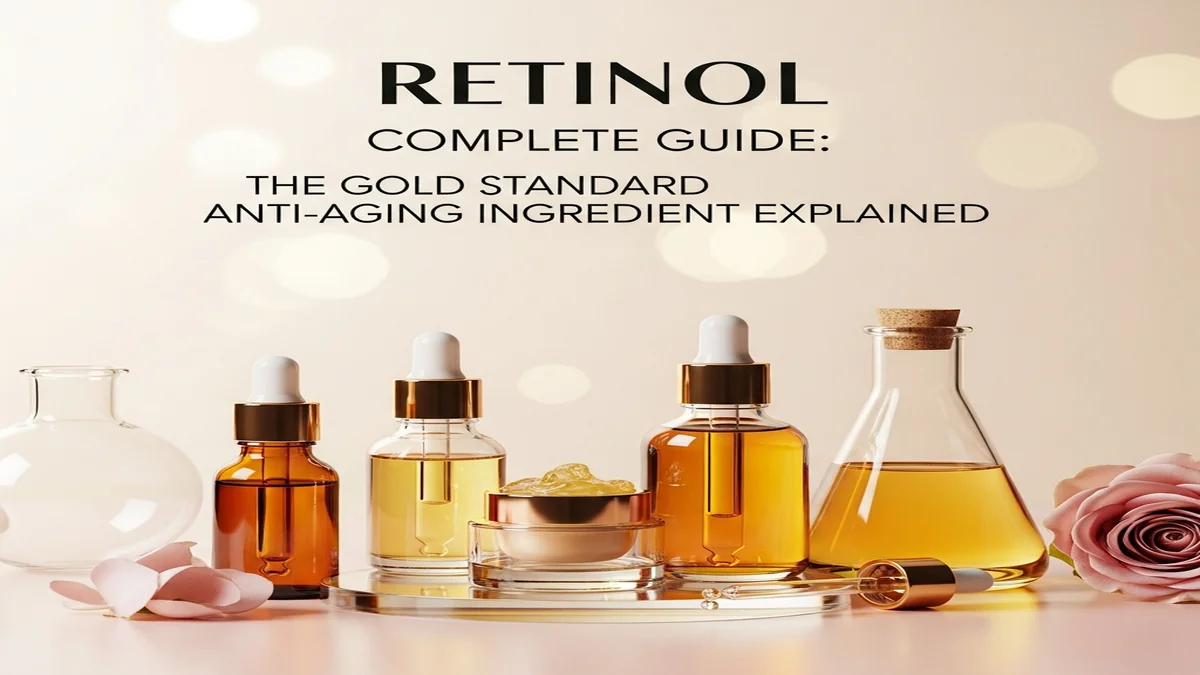
Retinol Complete Guide: The Gold Standard Anti-Aging Ingredient Explained
Retinol is the most evidence-backed topical anti-aging ingredient available. Decades of research confirm that retinoids (the family of vitamin A derivatives that includes retinol) stimulate collagen production, accelerate cell turnover, reduce fine lines and wrinkles, fade hyperpigmentation, improve skin texture, and even help clear acne.
Yet retinol is also one of the most misused ingredients in skincare. Too much too soon causes irritation, peeling, and redness that sends many people running. This guide covers everything you need to know to use retinol correctly and get the results it promises.
Understanding the Retinoid Family
Not all retinoids are the same. They vary in potency, irritation potential, and availability:
Over-the-Counter Retinoids
Retinyl palmitate — The gentlest and least potent. Must be converted through multiple steps to retinoic acid (the active form). Minimal evidence for anti-aging at typical concentrations. Found in many cosmetic products.
Retinol — The most popular OTC retinoid. Must be converted to retinaldehyde, then to retinoic acid in the skin. Effective but slower-acting than prescription retinoids. Available in 0.25-1% concentrations.
Retinaldehyde (retinal) — One step closer to retinoic acid than retinol, making it more potent. Less irritating than prescription tretinoin while being more effective than retinol. Growing in popularity as a "sweet spot" retinoid.
Hydroxypinacolone retinoate (HPR) — A newer ester that binds directly to retinoid receptors without conversion. Less irritating than retinol with comparable efficacy in some studies. Found in several modern formulations.
Prescription Retinoids
Tretinoin (retinoic acid) — The gold standard. Does not require conversion, so it works immediately and potently. Available in 0.025%, 0.05%, and 0.1% concentrations. Requires a prescription and causes more irritation than OTC retinoids.
Adapalene — A synthetic retinoid primarily used for acne. More stable and less irritating than tretinoin. Available OTC in some countries at 0.1%.
Tazarotene — The most potent prescription retinoid. Highly effective for acne and photoaging but causes significant irritation. Used under close dermatologist supervision.
How Retinol Works
Retinoids work by binding to specific receptors in your skin cells (RAR and RXR receptors), which triggers a cascade of beneficial effects:
Collagen Stimulation
Retinoids upregulate collagen gene expression in fibroblasts (collagen-producing cells). They also inhibit enzymes (matrix metalloproteinases or MMPs) that break down existing collagen. The net effect: more collagen production and less collagen degradation, leading to firmer, smoother skin over time.
Accelerated Cell Turnover
Retinoids speed up the rate at which skin cells divide and migrate from the lower epidermis to the surface. This faster turnover means:
- Fresher, more youthful cells reach the surface more quickly
- Dead skin cells are shed more efficiently (reducing dullness)
- Clogged pores clear faster (reducing acne)
- Hyperpigmented cells are replaced with normally pigmented ones (fading dark spots)
Normalized Oil Production
Retinoids regulate sebaceous gland activity, reducing excess oil production. This is one reason tretinoin and adapalene are effective acne treatments — they address both clogged pores and excess sebum.
Improved Skin Texture
The combination of collagen stimulation, faster cell turnover, and normalized keratinization (how skin cells mature) results in smoother, more refined skin texture with smaller-appearing pores.
How to Start Retinol: The Beginner Protocol
The number one mistake with retinol is starting too aggressively. Your skin needs time to build tolerance. Follow this graduated approach:
Weeks 1-2: Introduction Phase
- Frequency: Once per week
- Concentration: Start with 0.25% retinol (or retinaldehyde)
- Method: Apply a pea-sized amount to clean, dry skin in the evening
- Buffer technique: If sensitive, apply moisturizer first, wait 10 minutes, then apply retinol on top. This "buffering" reduces irritation while maintaining efficacy.
Weeks 3-4: Building Phase
- Frequency: Twice per week
- Continue with: Same concentration
- Monitor for: Mild dryness, slight peeling (normal and expected)
- If irritation is significant: Stay at once per week for another 2 weeks
Weeks 5-8: Establishing Phase
- Frequency: Three times per week, then every other night
- Continue with: Same concentration
- You may notice: Some purging (breakouts from accelerated cell turnover bringing existing clogs to the surface faster). This is temporary and typically resolves within 4-6 weeks.
Weeks 9-12+: Maintenance Phase
- Frequency: Every night (if tolerated) or every other night
- Concentration upgrade: After 12 weeks at 0.25%, you may increase to 0.5%. After another 12 weeks, consider 1%.
- Results timeline: Visible improvement typically begins at 8-12 weeks and continues improving for 6-12 months.
Managing Side Effects
The "Retinol Uglies"
During the first 2-6 weeks of retinol use, you may experience:
- Dryness and flaking
- Redness and sensitivity
- Mild stinging upon application
- Temporary worsening of acne (purging)
This adjustment period is normal and temporary. It is called "retinization" and occurs as your skin adapts to increased cell turnover.
How to Minimize Irritation
Buffer method: Apply moisturizer before retinol to reduce direct contact with skin.
Sandwich method: Moisturizer, then retinol, then moisturizer again. This is the gentlest application method.
Short-contact method: Apply retinol for 30-60 minutes, then wash it off and apply moisturizer. This reduces exposure time while still providing benefit.
Hydrating support: Use hyaluronic acid and ceramide-rich moisturizers to support your barrier during retinization.
Niacinamide pairing: Niacinamide strengthens the skin barrier and reduces inflammation, making it an ideal companion for retinol. See our niacinamide guide for more details.
When to Pause
Stop retinol temporarily if you experience:
- Raw, broken skin
- Persistent burning (not just mild stinging)
- Severe peeling that does not resolve with moisturizer
- Allergic reaction (hives, swelling)
Resume at a lower frequency once skin recovers (usually 3-7 days).
Retinol Rules
Always Use SPF
Retinol increases photosensitivity by thinning the stratum corneum (outermost skin layer). This makes your skin more vulnerable to UV damage. SPF 30+ every morning is non-negotiable when using retinol. See our SPF guide for choosing the right sunscreen.
Apply to Dry Skin
Damp skin absorbs retinol more rapidly, which increases irritation. Wait until your skin is completely dry (5-10 minutes after cleansing) before applying.
Less Is More
A pea-sized amount covers the entire face. More product does not mean better results — it means more irritation.
Evening Only
Retinol degrades in sunlight and loses efficacy. Always apply in your evening routine.
Avoid Mixing with Certain Actives
On the same evening, do not combine retinol with:
- AHAs (glycolic acid, lactic acid)
- BHAs (salicylic acid)
- Benzoyl peroxide (can oxidize retinol, reducing efficacy)
- Vitamin C (at low pH — the acidity can irritate alongside retinol)
These ingredients are fine on alternate nights or at different times of day.
Safe to Combine With
- Niacinamide (reduces irritation, complements retinol)
- Hyaluronic acid (provides hydration)
- Peptides (additional collagen support)
- Ceramides (barrier support)
Retinol by Age
20s: Prevention
Start with retinol in your mid-to-late 20s as a preventive measure. Low concentrations (0.25-0.5%) 2-3 times per week are sufficient.
Focus: Texture improvement, acne prevention, early anti-aging foundation.
30s: Early Treatment
Increase to 0.5-1% retinol or consider retinaldehyde for more potency without prescription. Use 3-5 nights per week.
Focus: Fine line prevention, collagen maintenance, evening skin tone.
40s: Active Treatment
Consider prescription tretinoin (0.025-0.05%) for maximum efficacy. Pair with peptides and vitamin C for comprehensive anti-aging. For age-specific complete routines, see our skincare by age guide.
Focus: Wrinkle reduction, collagen stimulation, hyperpigmentation fading.
50s+: Intensive Treatment
Prescription tretinoin (0.05-0.1%) if tolerated. Focus heavily on hydration and barrier support alongside retinoid use, as mature skin produces less natural oil and has a thinner barrier.
Focus: Intensive collagen rebuilding, skin firmness, comprehensive anti-aging.
Retinol During Pregnancy
Retinoids are contraindicated during pregnancy and breastfeeding. Oral retinoids (isotretinoin) are known teratogens. While topical retinol absorption is minimal, dermatologists universally recommend avoiding all retinoids during pregnancy and breastfeeding as a precaution.
Alternatives during pregnancy: Azelaic acid, vitamin C, niacinamide, and glycolic acid (in moderate concentrations) are considered safe and provide some overlapping benefits.
Choosing the Right Retinol Product
What to Look For
- Clearly stated concentration (0.25%, 0.5%, or 1%)
- Airless pump packaging (retinol degrades with air and light exposure)
- Opaque container (protects from light)
- Supporting ingredients: Niacinamide, ceramides, hyaluronic acid, squalane
- Encapsulated retinol (releases slowly, reducing irritation while maintaining efficacy)
What to Avoid
- Jar packaging (constant air exposure degrades retinol)
- Clear glass bottles (light degrades retinol)
- No concentration stated (likely too low to be effective)
- Products combining retinol with AHAs or BHAs in the same formula (increased irritation risk)
Results Timeline
- Week 1-4: Adjustment period (dryness, mild peeling, possible purging)
- Week 4-8: Skin texture begins improving, cell turnover normalizes
- Week 8-12: Visible improvement in fine lines, tone, and brightness
- Month 3-6: Significant improvement in wrinkles, hyperpigmentation, and overall skin quality
- Month 6-12: Maximum results from current concentration; consider increasing if plateaued
- Ongoing: Continued use maintains and builds on results. Stopping retinol causes gradual reversal of benefits over months.
The Bottom Line
Retinol is the most effective topical anti-aging ingredient available, backed by decades of rigorous research. The key to success is patience: start low, go slow, support your skin with hydrating and barrier-repairing ingredients, and never skip SPF.
For personalized retinol recommendations based on your skin type, age, and concerns, try GlowAI's AI skin analysis. It can help determine the right concentration and frequency for your specific needs, plus recommend complementary products like vitamin C for morning use.
Frequently Asked Questions
What does retinol do for skin?▼
Retinol accelerates cell turnover, boosts collagen production, reduces fine lines and wrinkles, fades dark spots, unclogs pores, and improves overall skin texture. It is considered the gold standard anti-aging ingredient by dermatologists worldwide.
How do I start using retinol without irritation?▼
Start with a low concentration (0.025 percent) two nights per week, applying a pea-sized amount after moisturizer. Gradually increase to every other night, then nightly over two to three months. Always use SPF during the day when using retinol.
What percentage of retinol should I use?▼
Beginners should start at 0.025 to 0.03 percent retinol. After six to eight weeks, move to 0.05 percent. Experienced users can use 0.5 to 1 percent. Higher concentrations are not necessarily better — consistency matters more than strength.
Can I use retinol with other active ingredients?▼
Avoid using retinol with AHAs, BHAs, benzoyl peroxide, or vitamin C in the same routine to prevent irritation. Alternate nights or use one in the morning and retinol at night. Hyaluronic acid and niacinamide pair safely with retinol.
At what age should I start using retinol?▼
Most dermatologists recommend starting retinol in your mid-twenties for prevention, or in your thirties when early signs of aging appear. Starting earlier at low concentrations helps maintain collagen and prevent fine lines before they form.
How long does retinol take to show results?▼
Retinol shows initial skin texture improvements in four to six weeks. Significant wrinkle reduction and dark spot fading take three to six months of consistent nightly use. Full collagen rebuilding benefits appear at six to twelve months.
Can retinol cause purging?▼
Yes, retinol can cause a purging phase in the first two to six weeks where breakouts temporarily increase as cell turnover accelerates. This is normal and different from irritation. Purging clears on its own as skin adjusts to the retinol.
Should I use retinol or retinal?▼
Retinal (retinaldehyde) is one conversion step closer to active retinoic acid than retinol, making it faster-acting and more potent. It also tends to cause less irritation. Retinol is more widely available and affordable. Both are effective choices.
Get Your Free AI Skin Analysis
Upload a selfie and get personalized skincare recommendations powered by AI.
Join 10,000+ beauty enthusiasts. Unsubscribe anytime.
Dr. Sophie Laurent
Board-certified dermatologist and Chief Medical Advisor at GlowAI.
View all articles by Dr. Sophie Laurent→Was this article helpful?
Continue Your Beauty Journey
Niacinamide Guide: Benefits, How to Use & Best Products (2026)
Niacinamide for skin — benefits, how to use it, and the best products for pores, oil, and dark spots. Full guide inside.
Vitamin C Serum Guide: Brighten, Protect & Anti-Age (2026)
Vitamin C serum guide — brighten skin, fight fine lines, and boost UV protection. Learn how to choose, layer, and store it the right way.
Skincare Routine by Age: Your 20s, 30s, 40s & Beyond (2026)
Skincare routine by age — what to use in your 20s, 30s, 40s, and beyond. Discover age-specific product picks and dermatologist advice.