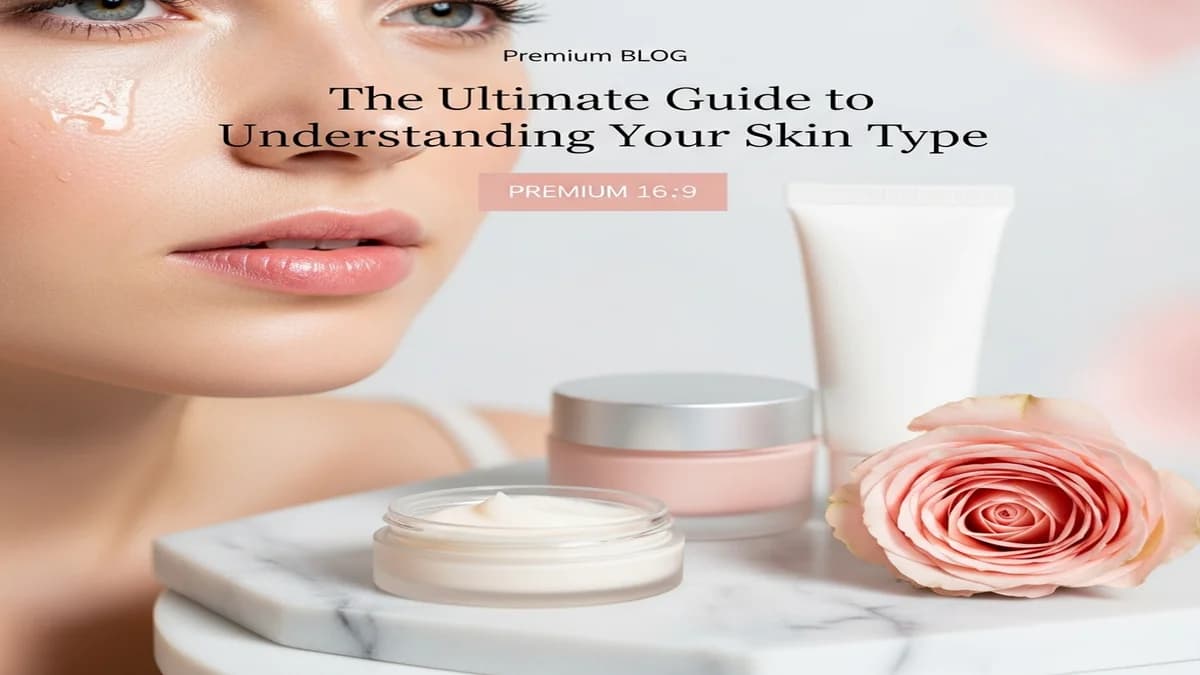
The Ultimate Guide to Understanding Your Skin Type
Understanding your skin type is the foundation of any effective skincare routine. Without this knowledge, you might be using products that do more harm than good. A rich cream designed for dry skin will clog oily pores, while a mattifying gel meant for oily skin will leave dry skin tight and flaky.
This guide walks you through proven methods for identifying your skin type, what each type means for product selection, and how to build a routine that works with your skin rather than against it.
The Five Skin Types
1. Normal Skin
Normal skin is well-balanced — not too oily, not too dry. It has a smooth texture, small pores, and few imperfections. Normal skin tolerates most products without adverse reactions and maintains a healthy, even-toned appearance throughout the day.
Key characteristics:
- Minimal visible pores
- Even skin tone with few blemishes
- No persistent dryness or oiliness
- Comfortable feel throughout the day
- Good elasticity and hydration
Routine focus: Maintenance and prevention. Normal skin benefits from a straightforward routine with gentle products that maintain its natural balance.
2. Oily Skin
Oily skin produces excess sebum, leading to a shiny appearance, enlarged pores, and a tendency toward acne and blackheads. The overproduction of oil is influenced by genetics, hormones, humidity, and stress.
Key characteristics:
- Visible shine, especially on the forehead, nose, and chin (T-zone)
- Enlarged, visible pores
- Prone to blackheads, whiteheads, and acne breakouts
- Makeup tends to slide off or break down during the day
- Skin may feel greasy within hours of cleansing
Routine focus: Oil control without stripping. Harsh products trigger rebound oil production. Lightweight, non-comedogenic products with niacinamide and salicylic acid work best. If breakouts are a primary concern, see our acne routine guide.
3. Dry Skin
Dry skin lacks moisture and natural oils. It may feel tight, rough, or flaky, and is prone to fine lines and irritation. Dry skin produces less sebum than other types, leaving the skin barrier more vulnerable to environmental damage.
Key characteristics:
- Tight, uncomfortable feeling after cleansing
- Visible flaking or peeling, especially around the nose and cheeks
- Rough or uneven texture
- Fine lines appear more prominent
- Dull, lackluster appearance
- May crack or become irritated in cold or dry weather
Routine focus: Hydration and barrier repair. Rich moisturizers with ceramides, hyaluronic acid, and squalane help restore moisture. Avoid foaming cleansers and alcohol-based products.
4. Combination Skin
Combination skin features both oily and dry areas — typically an oily T-zone (forehead, nose, chin) with dry or normal cheeks. This is the most common skin type and requires a balanced approach.
Key characteristics:
- Oily forehead, nose, and chin
- Normal to dry cheeks
- Pores vary in size across different face zones
- May experience breakouts in the T-zone while cheeks feel tight
- Seasonal changes affect the balance between zones
Routine focus: Zone-specific treatment. Lightweight products for the T-zone, richer formulas for dry areas. Multi-masking (using different masks on different zones) is particularly effective.
5. Sensitive Skin
Sensitive skin reacts easily to products, environmental factors, or stress with redness, itching, or burning. It may overlap with any other skin type — you can have oily-sensitive or dry-sensitive skin.
Key characteristics:
- Frequent redness or flushing
- Stinging or burning when applying products
- Reacts to fragrance, alcohol, or certain active ingredients
- Prone to rashes, bumps, or hives
- May have visible broken capillaries
- Skin feels uncomfortable in extreme temperatures
Routine focus: Gentle, fragrance-free products with minimal ingredients. Introduce new products one at a time with patch testing. Centella asiatica, aloe vera, and colloidal oatmeal are calming ingredients.
How to Determine Your Skin Type at Home
The Bare-Face Method
- Cleanse your face with a gentle cleanser
- Pat dry and do not apply any products
- Wait 30 minutes
- Observe your skin:
- Normal: Skin feels comfortable, no shine or tightness
- Oily: Visible shine across the entire face
- Dry: Skin feels tight, may see flaking
- Combination: Shine on T-zone, normal or dry cheeks
- Sensitive: Redness, irritation, or discomfort
The Tissue Test
- Cleanse your face and wait 30 minutes (no products)
- Press a clean tissue firmly against your T-zone (forehead, nose, chin)
- Press another tissue against your cheeks
- Examine the tissues:
- Oil on both: Oily skin
- Oil on T-zone only: Combination skin
- No oil on either: Dry or normal skin
- Slight oil on both: Normal skin
The Product Reaction Test
Track how your skin responds to products over 2-4 weeks:
- Frequent breakouts from rich products suggests oily or combination
- Tightness and flaking from lightweight products suggests dry
- Stinging or redness from active ingredients suggests sensitive
- Tolerates most products well suggests normal
Skin Type vs. Skin Condition
Your skin type is largely genetic and relatively stable throughout life. Skin conditions are temporary states that can affect any skin type:
Dehydration is a condition, not a type. Even oily skin can be dehydrated (lacking water, not oil). Dehydrated skin feels tight but still produces oil.
Acne is a condition that most commonly affects oily skin but can occur in any skin type.
Hyperpigmentation is a condition triggered by sun exposure, hormones, or inflammation, affecting all skin types.
Aging is a natural process that affects all skin types differently. For age-specific routines, see our skincare by age guide.
Understanding this distinction prevents misidentifying your type based on a temporary condition.
Building Your Type-Specific Routine
For Normal Skin
- Gentle cleanser (morning and evening)
- Vitamin C serum (morning)
- Lightweight moisturizer
- SPF 30+ (morning)
- Retinol (evening, 2-3 times per week)
For Oily Skin
- Gel or foam cleanser (morning and evening)
- Niacinamide serum (morning)
- Oil-free gel moisturizer
- Lightweight SPF 30+ (morning)
- Salicylic acid or retinol (evening)
For Dry Skin
- Cream or oil cleanser (morning and evening)
- Hyaluronic acid serum on damp skin
- Rich cream moisturizer with ceramides
- Moisturizing SPF 30+ (morning)
- Gentle retinol in a moisturizing base (evening)
For Combination Skin
- Gentle gel cleanser (morning and evening)
- Niacinamide serum (all over)
- Lightweight moisturizer (heavier on dry areas)
- SPF 30+ (morning)
- Spot-treat oily areas with salicylic acid, retinol all over (evening)
For Sensitive Skin
- Fragrance-free cream cleanser (morning and evening)
- Centella asiatica or azelaic acid serum
- Fragrance-free moisturizer with ceramides
- Mineral SPF 30+ (morning)
- Gentle retinaldehyde (evening, 1-2 times per week)
When Your Skin Type Changes
While your genetic skin type is relatively fixed, perceived skin type can shift due to:
- Age: Skin tends to produce less oil after 40, shifting oily skin toward normal or dry
- Hormones: Pregnancy, menopause, and hormonal medications affect oil production
- Climate: Humidity increases oiliness; dry or cold climates increase dryness
- Medications: Isotretinoin, birth control, and other medications alter skin behavior
- Over-treatment: Stripping oily skin with harsh products can cause rebound oiliness or sensitization
Reassess your routine seasonally and after major life changes.
How GlowAI Helps
Our AI skin analysis can identify your exact skin type in 60 seconds, along with 8 detailed metrics that give you a complete picture of your skin health. From there, we create a personalized routine that evolves with your skin. For an even deeper dive into skin type science and advanced typing methods, see our complete skin type guide.
Frequently Asked Questions
What are the five main skin types?▼
The five main skin types are normal, oily, dry, combination, and sensitive. Your skin type is determined by genetics and influences how much oil your skin produces, how it retains moisture, and how it reacts to products and environmental factors.
How do I know my skin type?▼
Determine your skin type by cleansing your face and waiting one hour without applying products. Oily skin will shine all over. Dry skin will feel tight. Combination skin will be oily in the T-zone only. Normal skin will feel balanced everywhere.
Can my skin type change over time?▼
Yes, skin type can change due to aging, hormonal shifts, climate changes, medication, and lifestyle factors. Oily skin in your twenties often becomes combination or normal by your forties. Reassess your skin type every few years.
What is the best routine for oily skin?▼
The best oily skin routine includes a foaming or gel cleanser, niacinamide serum for oil control, an oil-free gel moisturizer, and a matte-finish SPF. Use salicylic acid two to three times weekly to keep pores clear.
What is the best routine for dry skin?▼
The best dry skin routine includes a cream or milk cleanser, hyaluronic acid serum, a rich ceramide moisturizer, and a hydrating SPF. Add a facial oil at night and exfoliate gently once a week to prevent flaking.
Is combination skin the most common type?▼
Combination skin is one of the most common types, characterized by an oily T-zone (forehead, nose, chin) with normal to dry cheeks. It requires a balanced approach with lightweight products that hydrate without triggering excess oil.
What ingredients should sensitive skin avoid?▼
Sensitive skin should avoid fragrances, essential oils, alcohol denat, sulfates, and harsh exfoliating acids. Stick to fragrance-free, hypoallergenic products with soothing ingredients like centella asiatica, oat extract, and aloe vera.
How does a skin type quiz work?▼
A skin type quiz asks about your skin's oiliness, dryness, sensitivity, and pore size to determine your type. GlowAI's AI skin analysis goes further by examining your actual skin through a photo to provide a precise, personalized assessment.
Get Your Free AI Skin Analysis
Upload a selfie and get personalized skincare recommendations powered by AI.
Join 10,000+ beauty enthusiasts. Unsubscribe anytime.
Dr. Sophie Laurent
Board-certified dermatologist and Chief Medical Advisor at GlowAI.
View all articles by Dr. Sophie Laurent→Was this article helpful?
Continue Your Beauty Journey
How to Determine Your Skin Type: Complete Guide (2026)
Skin type guide — identify if you're oily, dry, combo, sensitive, or normal and build the right routine. Take the free quiz.
Morning vs Evening Skincare Routine: Why You Need Both (2026)
Morning vs evening skincare — why you need both and what goes where. Optimize your AM/PM routine with this expert breakdown.
Acne Skincare Routine: Clear Skin Without Barrier Damage (2026)
Acne skincare routine that clears breakouts without wrecking your barrier. Dermatologist-approved steps for every skin type. Learn more.