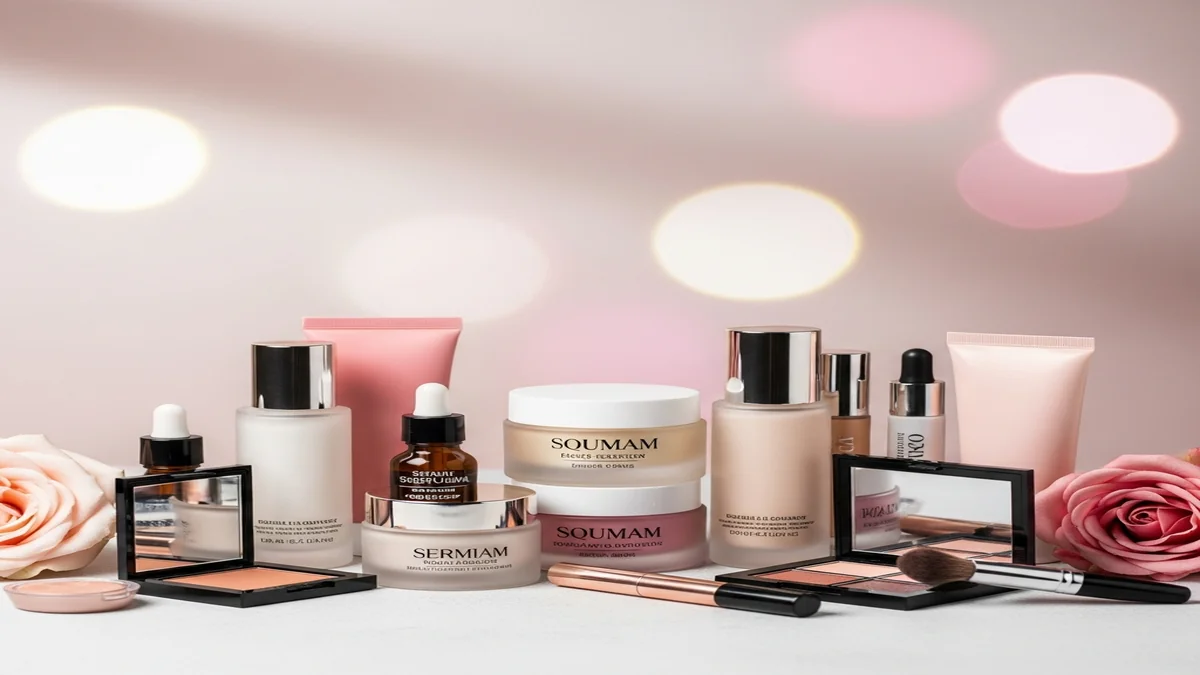
Beauty on a Budget: How to Build an Effective Routine Without Breaking the Bank
Here is a truth the beauty industry does not want you to know: the price of a skincare product has almost no correlation with its effectiveness. A $12 drugstore moisturizer with ceramides can outperform a $150 luxury cream with the same active ingredients. The difference is often packaging, marketing, and brand positioning — not formulation quality.
This guide shows you how to build a genuinely effective skincare and beauty routine on a budget, where the few strategic splurges actually make sense, and where saving money costs you nothing in results.
The Science Behind "Expensive Does Not Mean Better"
Active Ingredients Are Active Ingredients
Niacinamide is niacinamide whether it comes in a $10 serum or a $90 one. The molecule is identical. What matters is:
- Concentration: Is the active ingredient present at an effective percentage?
- Formulation: Is the pH correct? Are there complementary ingredients that enhance stability and penetration?
- Stability: Is the product packaged to protect light-sensitive ingredients (like vitamin C)?
Many drugstore brands now formulate with the same concentrations, pH levels, and stabilization techniques as luxury brands. The gap in quality has narrowed dramatically.
What You Are Actually Paying For
When you buy a luxury skincare product, a significant portion of the price covers:
- Marketing and advertising (celebrity endorsements, magazine placements)
- Premium packaging (heavy glass jars, magnetic closures)
- Brand positioning and prestige
- Retail margins (department store shelf space is expensive)
- Research and development (sometimes, though drugstore brands invest heavily too)
A $50 serum might contain $3-5 worth of ingredients. A $15 serum might contain $2-4 worth of the same ingredients. The performance gap is often minimal.
Where to Save (Most of Your Routine)
Cleanser: Save
A cleanser is on your skin for 30-60 seconds before being rinsed off. Expensive cleansers with fancy ingredients wash down the drain before they can provide significant benefit. What matters is that it:
- Is pH-balanced (4.5-5.5)
- Does not strip your skin (no harsh sulfates)
- Removes dirt, oil, and SPF effectively
Budget-friendly cleansers perform identically to luxury versions. This is the easiest category to save on.
Moisturizer: Save
A good moisturizer needs humectants (glycerin, hyaluronic acid), emollients (squalane, fatty acids), and occlusives (ceramides, dimethicone) in a well-formulated base. Drugstore moisturizers with these ingredients perform comparably to luxury creams.
Look for: Ceramides, hyaluronic acid, glycerin, niacinamide. These ingredients are inexpensive to formulate and widely available in budget products.
Body Care: Save
Body lotion, body wash, hand cream — these are high-volume products covering large surface areas. Luxury body care is one of the biggest markups in beauty. Drugstore body products with proven ingredients (ceramides, shea butter, glycerin) are excellent.
Lip Balm: Save
Lip balm is lip balm. A $3 balm with petrolatum, lanolin, or shea butter protects and moisturizes lips as effectively as a $25 luxury version.
Nail Polish: Save
Drugstore nail polish formulas have improved dramatically. Many perform comparably to salon brands in terms of color payoff, wear time, and finish. The main difference is shade range and bottle aesthetics.
Cotton Pads, Tools, and Accessories: Save
Cotton rounds, nail files, hair ties, makeup sponges (many drugstore sponges rival premium brands) — these commodity products rarely justify premium pricing.
Where to Splurge Strategically
SPF: Worth Investing In
Sunscreen is the most important product in your routine. A bad sunscreen — one that feels terrible on your skin — is one you will not use consistently. Spending more on an SPF you genuinely enjoy wearing ensures you actually apply it every day.
What you are paying for: Elegant textures, invisible finishes, no white cast, pleasant feel under makeup. These formulation qualities often cost more but make the difference between daily use and skipping SPF.
Budget compromise: Many mid-range SPFs now offer excellent cosmetic elegance. You do not need the most expensive option, but investing $15-25 rather than $5-8 often yields a significantly better daily-wear experience.
Vitamin C Serum: Worth Investing In
L-ascorbic acid (the most effective form of vitamin C) is notoriously unstable. It degrades when exposed to light, heat, and air, becoming ineffective. Cheap vitamin C serums often use poor stabilization, meaning the product may be degraded before you finish the bottle.
What you are paying for: Proper stabilization, correct pH formulation (below 3.5), air-tight packaging, and effective concentration (10-20%). These formulation details directly affect whether the product works.
Budget option: Brands that use alternative vitamin C derivatives (ascorbyl glucoside, ethyl ascorbic acid) are more stable and affordable, though slightly less potent than well-formulated L-ascorbic acid.
Retinol/Retinoid: Worth Investing In
Like vitamin C, retinol requires careful formulation for stability and effective delivery. Cheap retinol products may use inadequate concentrations or poor stabilization.
What you are paying for: Effective concentration, encapsulation technology (which reduces irritation while maintaining efficacy), and complementary ingredients (ceramides, niacinamide) that support skin while retinol works.
Budget compromise: Several affordable brands now offer well-formulated retinol with proper concentrations and packaging. You do not need to spend $80, but the $5 retinol cream might not deliver meaningful results.
Professional Treatments: Worth Investing In
If your budget allows any splurge, professional treatments (chemical peels, microneedling, laser) performed by qualified dermatologists or estheticians deliver results that no at-home product can match. One professional treatment can achieve more than months of expensive serums.
Building the Budget Routine
The $30-40 Complete Routine
This covers all essential steps with effective, affordable products:
- Gentle cleanser ($6-10): Look for pH-balanced, fragrance-free gel or cream cleanser
- Niacinamide serum ($6-10): 5-10% niacinamide for oil control, barrier support, and brightening
- Moisturizer with ceramides ($8-15): Ceramide-based cream or lotion
- SPF 30+ ($8-15): Broad-spectrum, cosmetically elegant formula
Total: $28-50, lasting 2-3 months each
This four-product routine provides cleansing, active treatment, hydration, barrier support, and sun protection. It is a complete, dermatologist-approved routine.
The $50-70 Enhanced Routine
Add targeted actives for specific concerns:
- Gentle cleanser ($6-10)
- Vitamin C serum ($12-20): For morning antioxidant protection and brightening
- Niacinamide serum ($6-10): For oil control and barrier support
- Moisturizer with ceramides ($8-15)
- SPF 30+ ($8-15)
- Retinol ($10-18): For evening use, anti-aging and texture improvement
Total: $50-88, lasting 2-3 months each
The Budget Nail Care Kit
- Cuticle oil ($4-6): Jojoba or vitamin E based
- Glass nail file ($5-8): Lasts for years
- Base coat ($4-6)
- Top coat ($4-6)
- 2-3 nail polish colors ($3-5 each)
- Hand cream ($5-8)
Total: $25-40, lasting 3-6 months
The Budget Hair Care Essentials
- Sulfate-free shampoo ($6-10)
- Conditioner ($6-10)
- Leave-in conditioner or serum ($6-10)
- Deep conditioning mask ($6-10): Weekly use, lasts months
Total: $24-40, lasting 2-4 months
Money-Saving Strategies
Buy What You Need, Not What Is Trending
Social media creates constant pressure to buy new products. Before purchasing anything:
- Does this address a specific skin concern I have?
- Does it contain an ingredient my current routine lacks?
- Am I buying it because it works, or because it is viral?
The most expensive skincare habit is buying products you do not need.
Use Products Correctly
Getting the most from affordable products:
- Apply vitamin C and retinol at the right time (C in morning, retinol at night)
- Apply hyaluronic acid to damp skin (dry application can backfire)
- Use the correct amount of SPF (a nickel-sized dollop for the face)
- Wait between layers for absorption
- Store products properly (cool, dark place for actives)
Maximize Product Life
- Pump bottles preserve products better than jars (less air exposure)
- Store vitamin C in the refrigerator to extend potency
- Cut open tubes to access the last 10-20% of product
- Do not buy products in sizes you cannot finish within their recommended timeframe
Do It Yourself (Where Appropriate)
DIY manicures save $25-50 per session. With basic tools and practice, at-home manicures deliver salon-comparable results.
At-home hair masks using kitchen ingredients (honey, olive oil, coconut oil) provide deep conditioning without salon pricing.
At-home facials combining gentle exfoliation, steam, mask, and moisturizer replicate basic facial steps.
Do NOT DIY: Chemical peels above 10%, extractions (risk of scarring), anything involving needles or devices you are not trained to use.
Shop Smart
- Compare price per ounce, not sticker price
- Larger sizes often have lower per-ounce cost
- Sales and loyalty programs at drugstores provide significant savings
- Multi-use products (tinted moisturizer with SPF, lip and cheek tints) reduce the number of products needed
The Ingredients That Deliver at Any Price
These proven ingredients are available in affordable products:
Niacinamide: Oil control, barrier support, brightening. Available in $6-10 serums.
Hyaluronic acid: Hydration for all skin types. Available in $8-12 serums.
Ceramides: Barrier repair and moisture retention. Available in $8-15 moisturizers.
Salicylic acid: Acne treatment and pore clearing. Available in $6-10 products.
Glycerin: One of the most effective humectants. Present in most affordable moisturizers.
Centella asiatica: Soothing and barrier repair. Available in $8-12 products.
Azelaic acid: Brightening, anti-acne, anti-inflammatory. Available in $8-15 products.
The Bottom Line
Great skin is not bought; it is built through consistency, correct product selection, and patience. A $40 routine used consistently for 6 months will always outperform a $400 routine used sporadically.
Focus your spending on proven ingredients at effective concentrations, invest in the few categories where formulation quality truly matters (SPF, vitamin C, retinol), and save confidently on everything else.
For personalized product recommendations based on your actual skin needs, try GlowAI's AI skin analysis. Understanding your skin type and specific concerns prevents you from wasting money on products that do not address your real needs. For the ideal morning and evening routine structure, see our morning and evening routine guide.
Frequently Asked Questions
How can I build a skincare routine on a budget?▼
Focus on three essentials: a gentle cleanser, a moisturizer with hyaluronic acid, and SPF. Drugstore brands like CeraVe, The Ordinary, and Neutrogena offer effective formulas under $15 each. Skip unnecessary extras until your budget allows.
What are the best affordable skincare brands?▼
Top affordable skincare brands include The Ordinary for serums, CeraVe for moisturizers, Neutrogena for SPF, La Roche-Posay for sensitive skin, and NYX for budget makeup. These brands offer dermatologist-recommended formulas without premium pricing.
Is expensive skincare actually better?▼
Not necessarily. Many affordable skincare products contain the same active ingredients as luxury brands. What matters is the concentration of actives, the formulation, and consistency of use — not the price tag on the packaging.
How do I save money on beauty products?▼
Save money by buying multi-use products, waiting for sales, using subscription discounts, choosing drugstore dupes of high-end products, and focusing on ingredients rather than brand names. A simple routine is often more effective and cheaper.
What beauty products are worth splurging on?▼
SPF, retinol serums, and treatment products with high active concentrations are worth investing in. Basic cleansers and moisturizers work well at drugstore prices. Spend where ingredient quality and formulation directly affect results.
Can I get a complete beauty routine for under $50?▼
Absolutely. A cleanser ($8), moisturizer ($12), SPF ($10), mascara ($8), and lip balm ($5) totals under $50 and covers daily skincare and makeup essentials. Add a serum when budget allows for targeted treatment.
What drugstore products are as good as luxury ones?▼
CeraVe moisturizing cream rivals La Mer, The Ordinary niacinamide matches SkinCeuticals, and Maybelline mascaras compete with high-end alternatives. Look for the same active ingredients at the same concentrations for true dupes.
How often should I replace beauty products on a budget?▼
Replace skincare products every six to twelve months once opened. Mascaras should be replaced every three months. Buy smaller sizes to avoid waste and ensure you use products before they expire, saving money in the long run.
Get Your Free AI Skin Analysis
Upload a selfie and get personalized skincare recommendations powered by AI.
Join 10,000+ beauty enthusiasts. Unsubscribe anytime.
Was this article helpful?
Continue Your Beauty Journey
How to Determine Your Skin Type: Complete Guide (2026)
Skin type guide — identify if you're oily, dry, combo, sensitive, or normal and build the right routine. Take the free quiz.
Morning vs Evening Skincare Routine: Why You Need Both (2026)
Morning vs evening skincare — why you need both and what goes where. Optimize your AM/PM routine with this expert breakdown.
At-Home Manicure Guide: Salon-Quality Nails in 30 Minutes (2026)
At-home manicure guide for salon-quality nails in 30 minutes. Step-by-step techniques, tools, and pro tips. Get the tutorial.